2021 SDS Disability Survey Report
Executive Summary
In 2021, San Diego State University’s Student Disability Services department (formerly Student Ability Success Center) conducted a survey to provide baseline data on several areas related to disability and accessibility at the university. The survey was distributed to SDSU students and staff. The areas covered by the survey included accommodations, identity and representation of disability, physical barriers, and awareness of disability.
Background
General backgorund/purpose
Methodology
In 2021, San Diego State University’s Student Disability Service department (formerly the Student Ability Success Center) developed, designed, and ran a survey for disability. This survey was created with the objective of **Add Here**. This survey was sent to both students and staff/faculty, with these groups answering many of the same questions. Questions asked to respondents were either selected choices, consisting of 2-4 responses, or open-ended responses. For questions that only featured open-ended responses, categories were created to count responses with common themes or ideas.
Questions did not require a response to move forward, leading to some variation of response numbers per respondent and per question. Due to this, the percentage of total respondents are primarily used in this report. Counts for individual questions as well as percentages are provided in the PowerBI report linked at the end of this report.
Demographics
Question: Do You Consider Yourself Disabled?
 Open the image full screen.
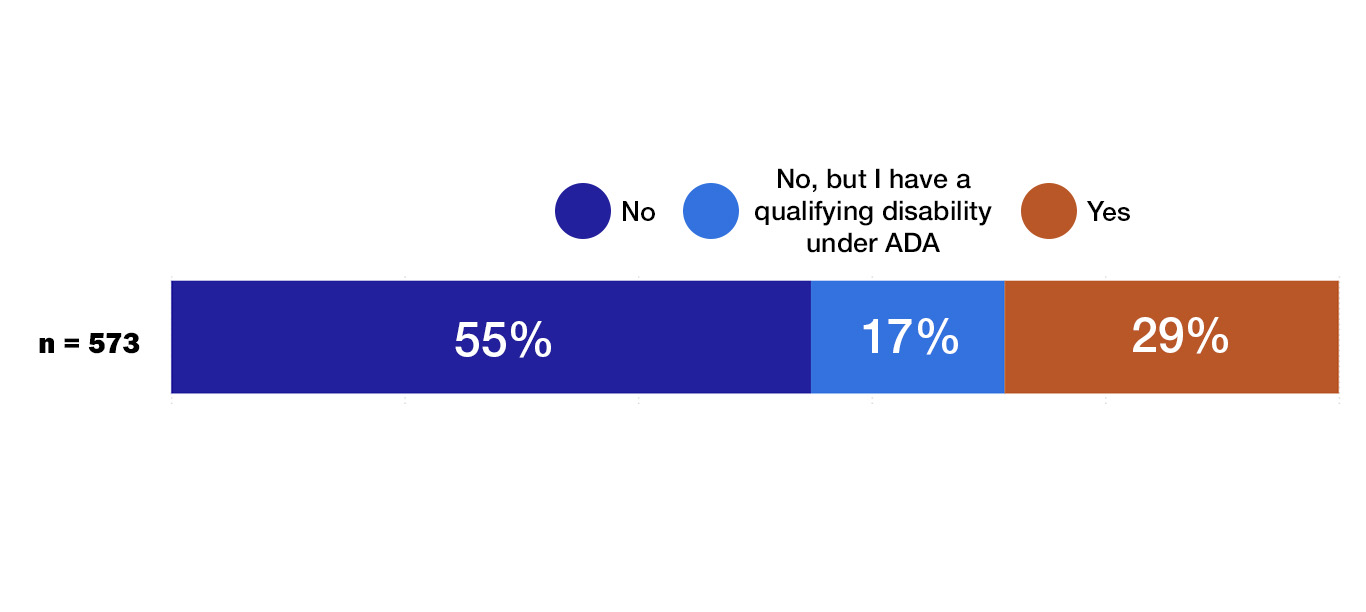
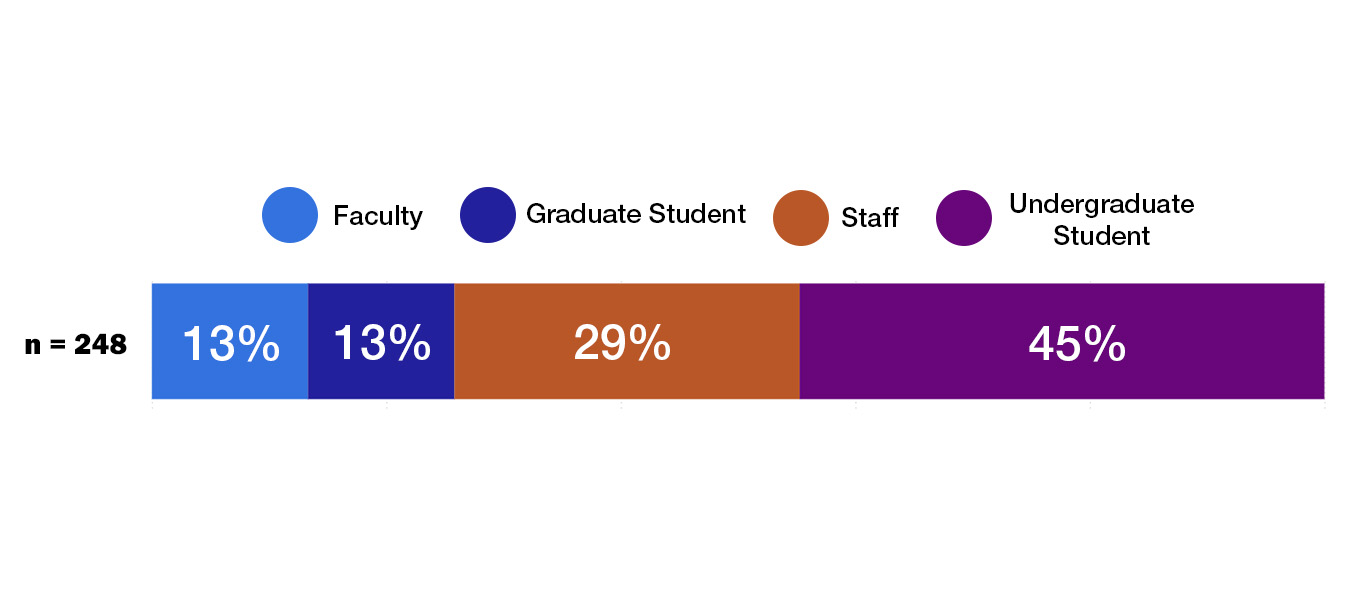
Of 573 initial respondents, 259 (45%) respondents reported having a disability. Of those who reported having a disability, 95 reported that they do not consider themselves disabled, but do have a qualifying disability under the Americans with Disabilities Act. Of 248 respondents who chose to answer, 111 (45%) were undergraduate students, 31 (12%) were graduate students, 73 (30%) were staff, and 33 (13%) were faculty.
Question: What Role at SDSU Best Describes You?
 Open the image full screen.
Question: What Disabilities Apply to You? (May Choose One or Multiple)
 Open the image full screen.
Findings
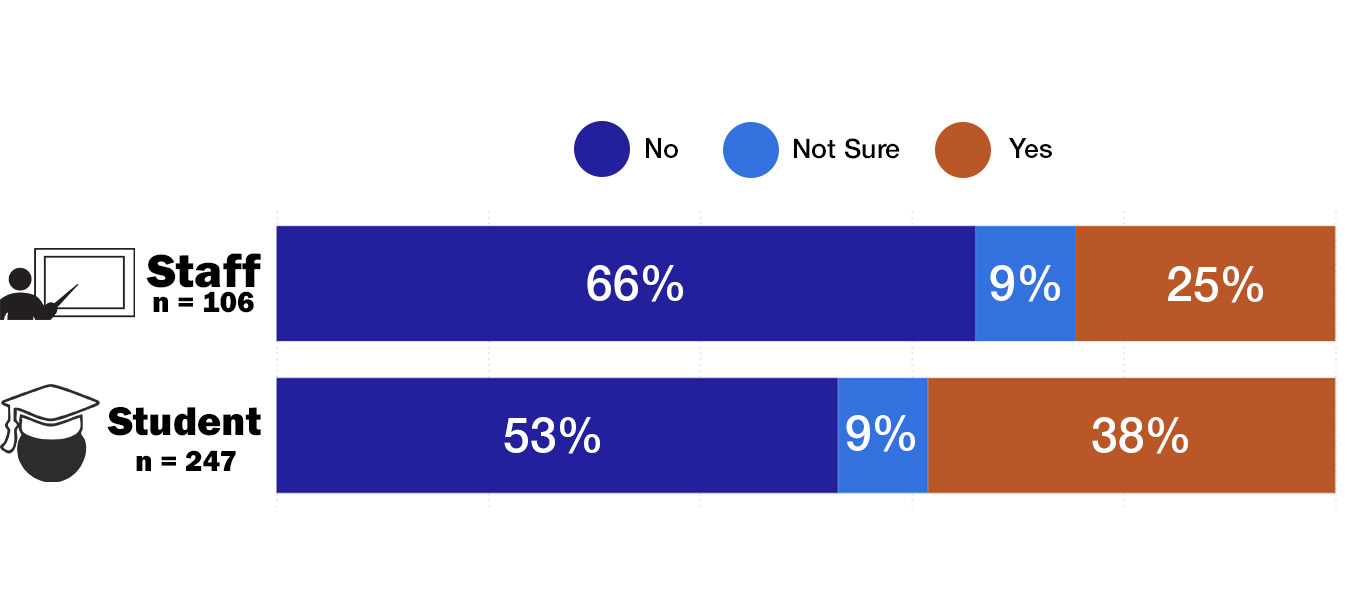
Question: Have You Used Accommodations or Accessibility Resources in the Past 12 Months?
 Open the image full screen.
Students and Staff were asked if they had used accommodations in the 12 months prior to taking this survey. 38% of students reported using accommodations, while 25% of staff and faculty reported the same.
For students who had not used accommodations, some of the main reasons cited were the difficulty of the process and timeliness of the process. Several students noted the wait times associated with getting proper documentation from doctors, and the time needed to process that documentation. Students were quoted as saying things like “The process is a lot of work” and “My diagnoses are fairly new and I don’t yet have the proper documentation to provide to the school to get the accommodations”
The most common factors cited by staff were the feeling that accommodations were unnecessary, or that they were unsure about how to receive accommodations or the extent to which accommodations would cover them. Students also noted these factors.
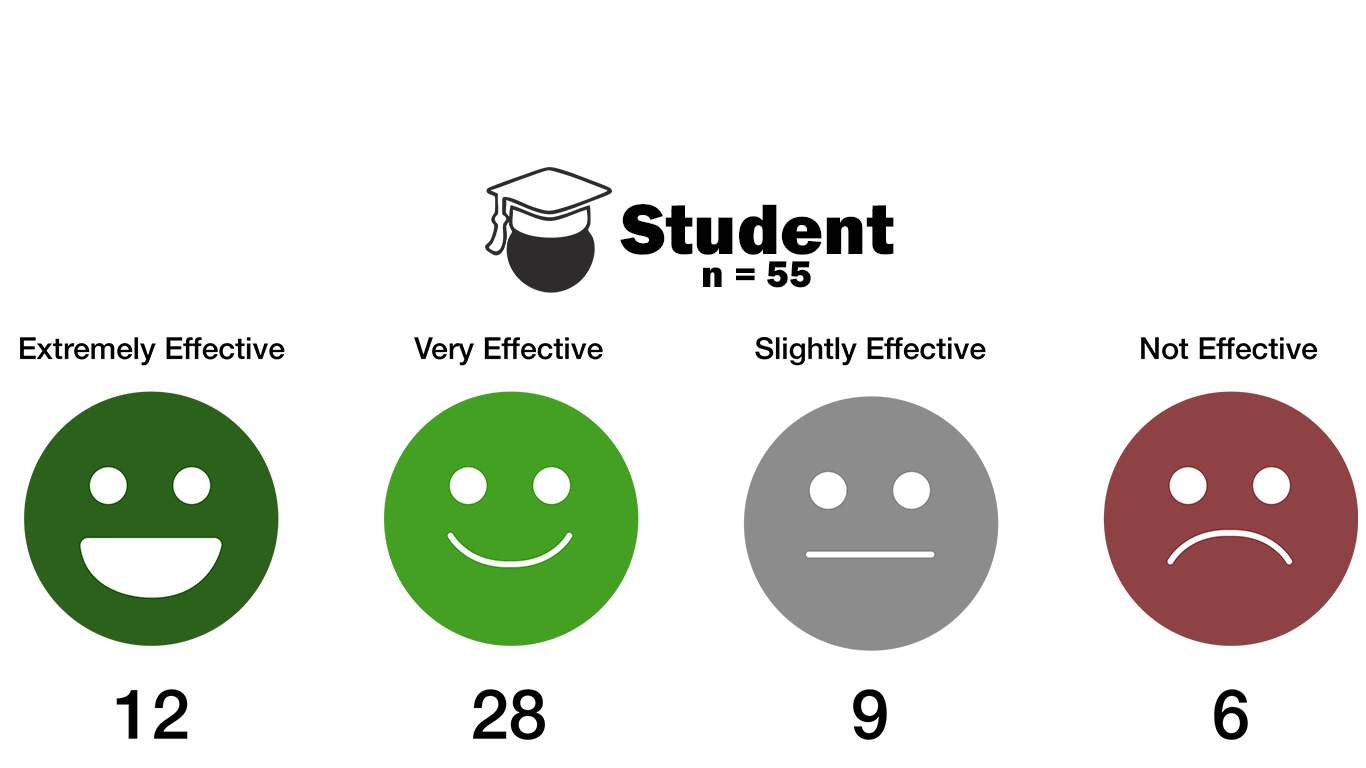
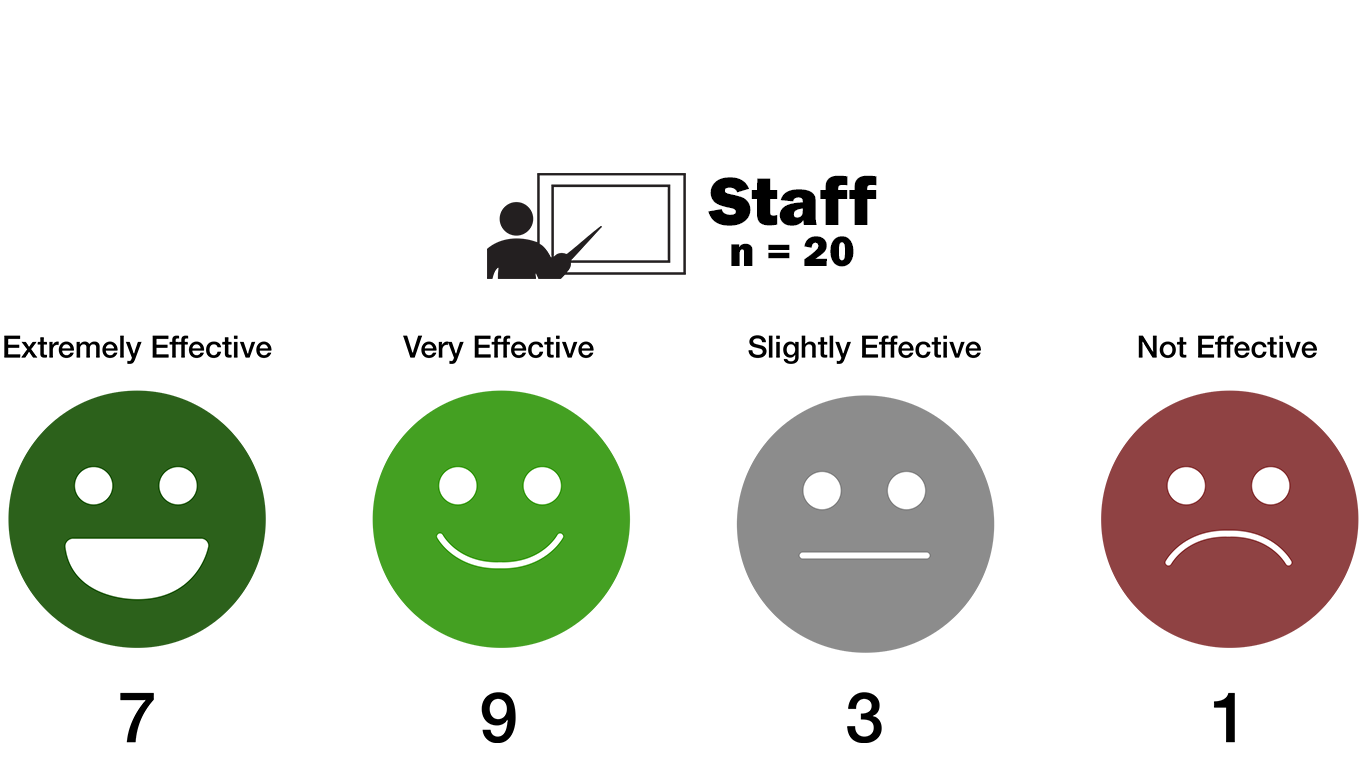
Question: How Effective Were the Accommodations You Received in the Last 12 Months in Relation to Your Academic/Professional Success?
 Open the image full screen.
 Open the image full screen.
For students who had used resources, the vast majority reported receiving them through Student Disability Services and in their courses. 72% of students who used resources reported the help they received being “Very” or “Extremely” effective. For staff who had used resources, the areas where they had received help from were more varied, with Employee Relations, directly from supervisors, and IT Support being the three most common. 80% of staff who used resources reported the help they received being “Very” or “Extremely” effective.
For students, a majority reported learning where to access resources and accommodations from the Student Disability Services website, with SDSU staff and faculty, prospective student events, and high school/community college staff also being cited. For staff, the majority reported learning about resources from colleagues.
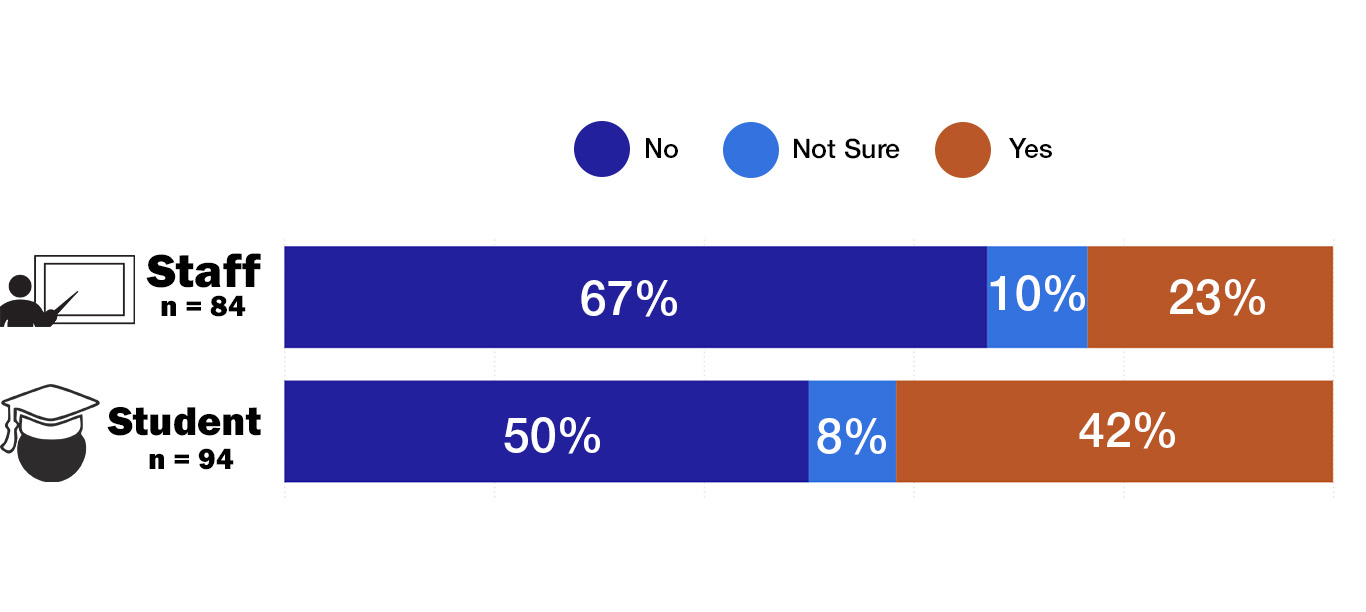
Question: Have You Encountered Any Physical Barriers at the SDSU Campus in the Past 12 Months?
 Open the image full screen.
Respondents were asked if they had encountered any physical barriers on the SDSU campus in the 12 months prior to taking the survey. Of respondents who had encountered physical barriers, parking and inaccessible access to physical structures were the most common barriers cited.
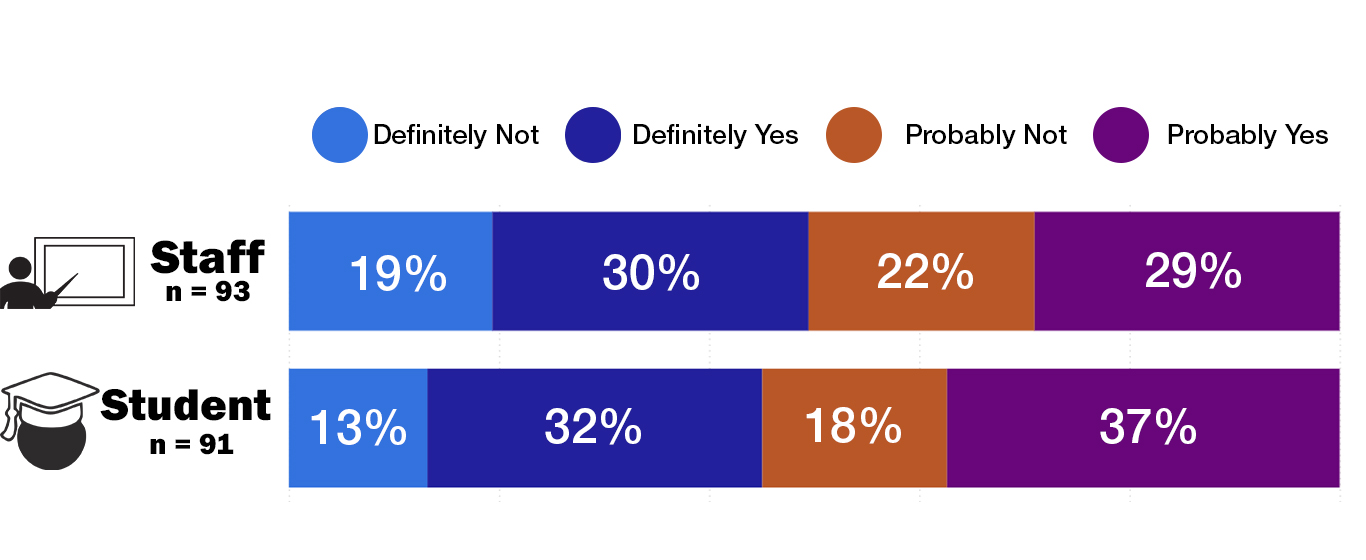
Question: Do You Consider Disability to be a Core Part of Your Identity?
 Open the image full screen.
Respondents were asked about disability in relation to their core identity and their langauge preferences. First, respondents were asked if they considered disability to be a core part of their identity. For students, about 78% responded that they did, while the figure was 62% for staff. The reasons why respondents said yes or no varied widely, with those who did saying things like “It is part of my everyday life” and “My disability dictates how I live my life on a daily basis”, while those who did not said things like “...It is only a small piece of my identity. I am much more than a disability” as well as “I was born deaf and never experienced the process of being disabled, thus I simply identify myself as someone who is different from the majority of people.”
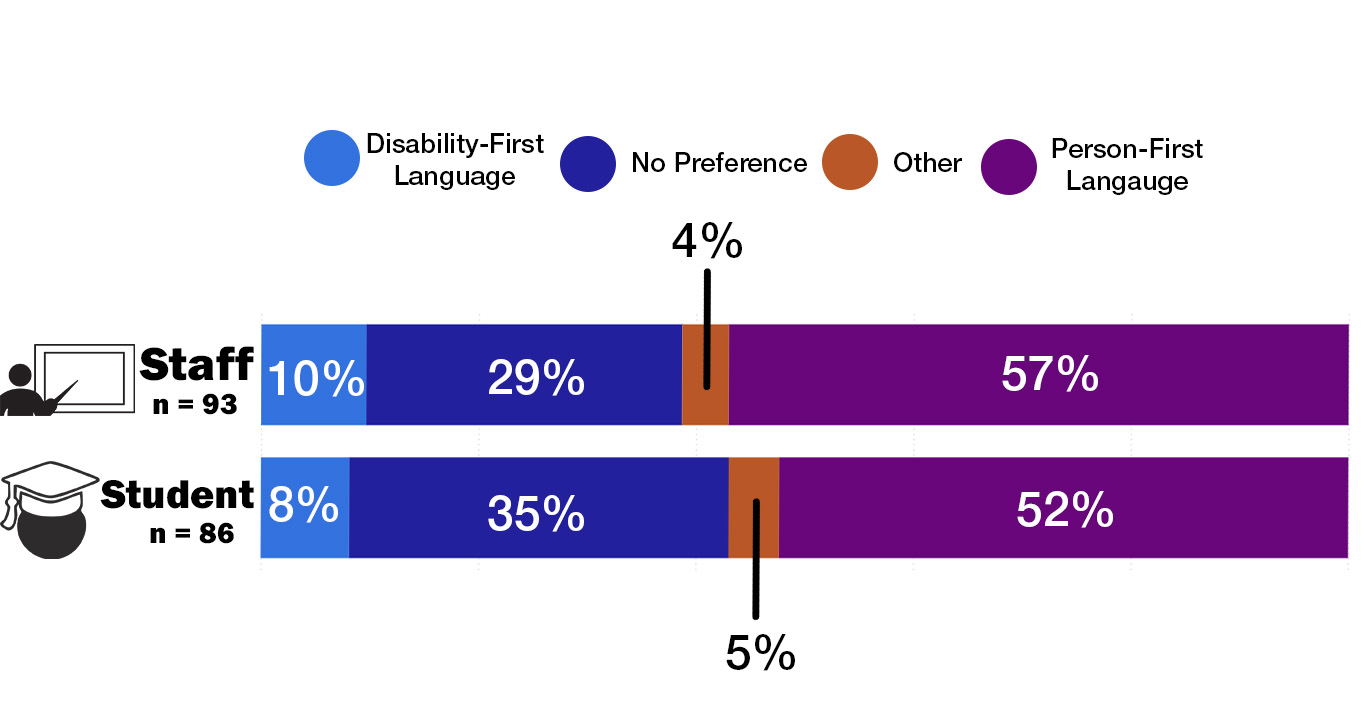
Question: What Type of Langauge Do You Prefer to Use In Reference to Yourself?
 Open the image full screen.
**INTRODUCE PERSON-FIRST and DISABILITY FIRST -- Question was asked to determine SDSU publication policy
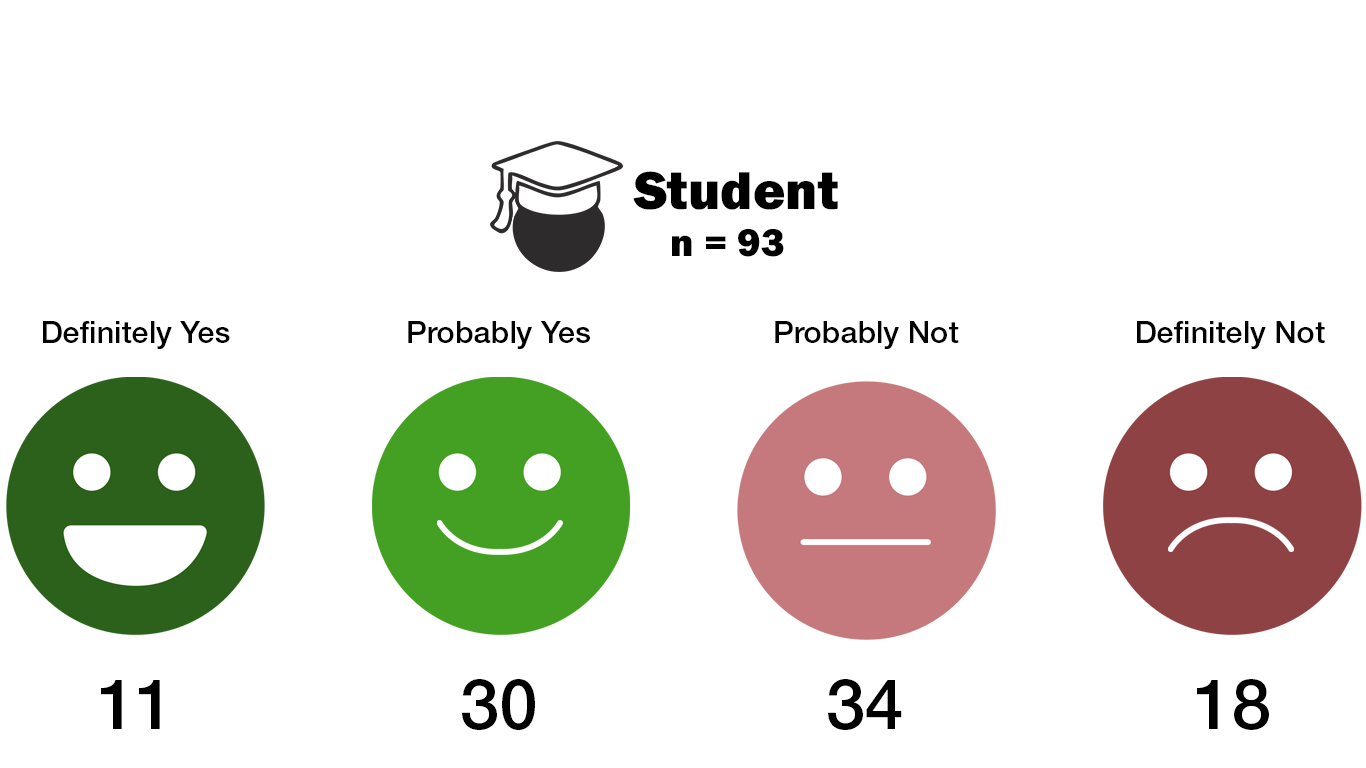
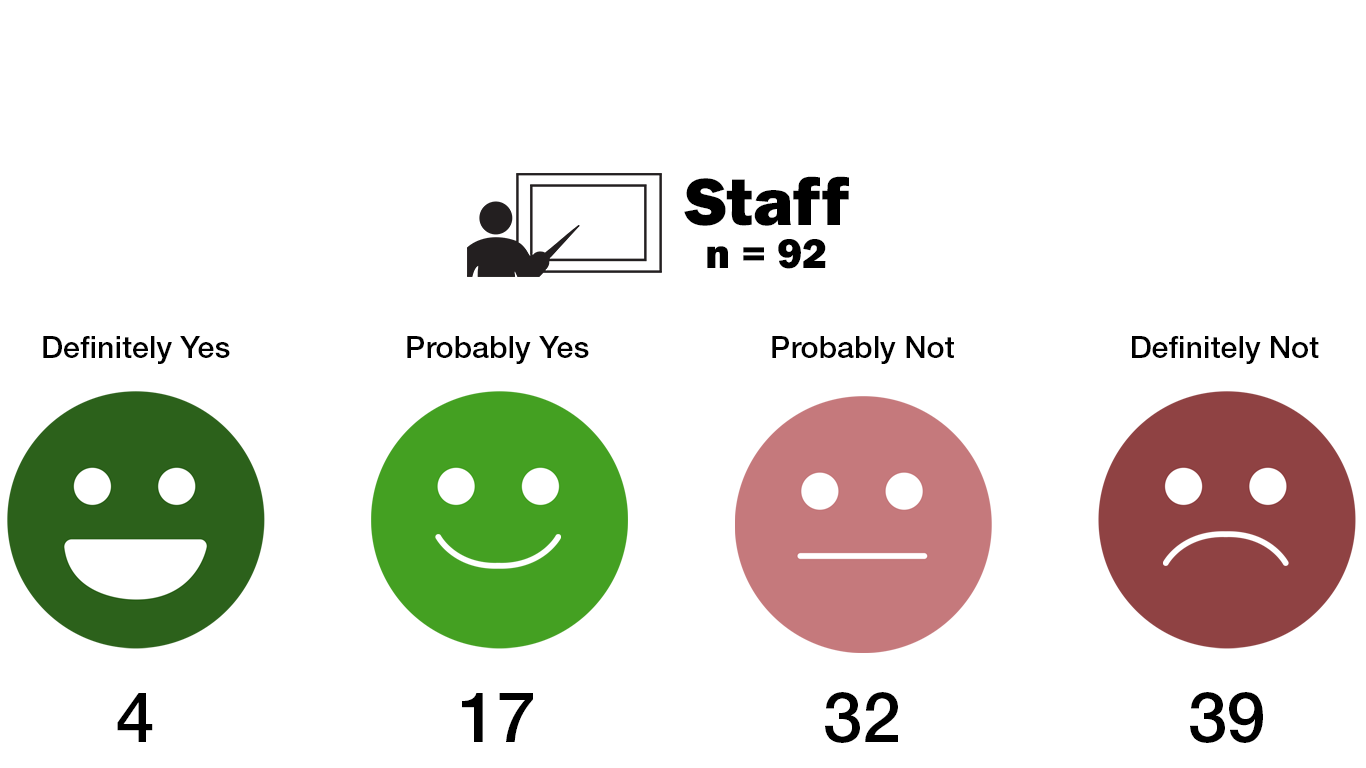
Respondents were then asked if they felt San Diego State values disability at the same level it does other forms of diversity (such as cultural identity and gender identity). For students, about 44% felt that SDSU does value disability the same, while 23% of staff felt the same.
Question: Do You Feel SDSU Values Disability at the Same Level as Other Forms of Diversity?
 Open the image full screen.
 Open the image full screen.
For staff, the most common reason for not feeling the school valued it the same was a perceived lack of representation and awareness of disability. For students, the most common reason cited was issues with accommodations, with others noting a lack of representation.
Those who did feel the university valued disability equally cited positive experiences at SDSU both personally and academically/professionally.
As a final question, respondents were asked to describe their experience as part of the disability community at SDSU. This question was entirely open-ended. Responses varied between positive and negative experiences.
Across students and staff/faculty, those who were generally positive cited positive relationships with peers and professors/supervisors, as well as positive experiences receiving accommodations as reasons for their positive experience. Those who were generally negative expressed difficulties with accommodations, as well as a perceived lack of awareness around campus.